Coordinating Shared Transport for Large Groups and Families

Imagine standing on a street corner in a foreign city or a remote mountain town, looking at a group of twelve people, three rental cars, and a single set of GPS directions that no one can agree on. The chaos of a large group trip often boils down to the logistics of moving from point A to point B. If you haven't planned your transit ahead of time, you aren't just looking at a minor delay; you're looking at a massive headache that drains the energy of every person involved. This guide covers the practicalities of arranging movement for large parties, whether you are dealing with a multi-generational family or a large friend group.
Transport is the backbone of any group trip. When you get this wrong, you spend more time waiting on the curb than actually seeing the sights. When you get it right, the movement becomes a seamless part of the experience. We'll look at the trade-offs between renting multiple vehicles, hiring private drivers, and relying on public transit systems.
Should You Rent Multiple Cars or One Large Van?
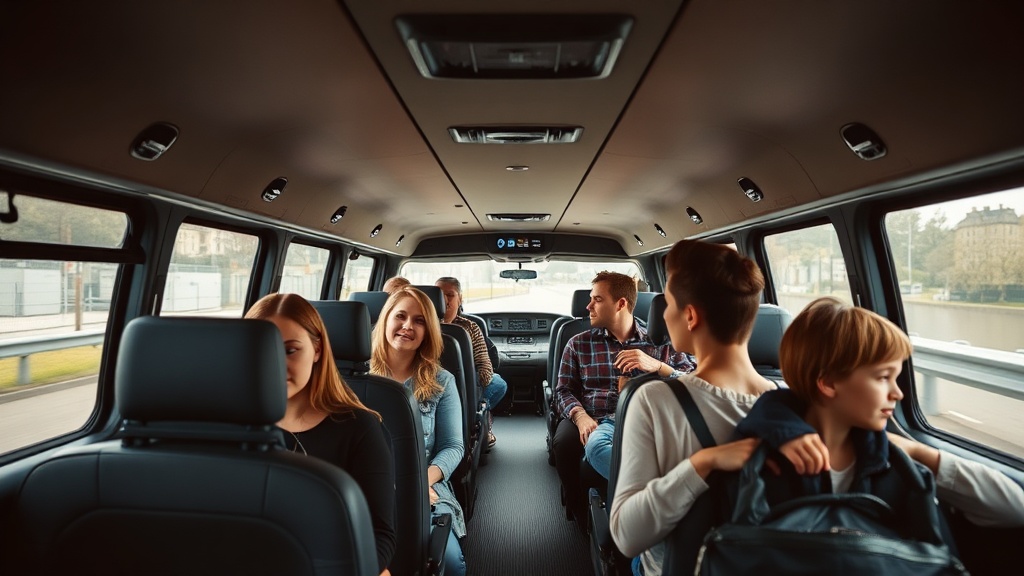
The debate between splitting into smaller cars or sticking together in one large vehicle is constant. A single large passenger van—think a Ford Transit or a Mercedes Sprinter—keeps the group together, which helps with morale and ensures everyone arrives at the restaurant at the same time. However, these vehicles are harder to park and can be a nightmare in tight European or coastal streets.
On the other hand, renting two or three smaller SUVs offers more freedom. If a subset of the group wants to stay out late at a museum while others head back to the hotel for a nap, separate cars make that possible. The downside? You'll spend half your trip acting as a human stopwatch, making sure everyone is ready to leave at the same time. You also end up paying more in total rental fees and fuel for multiple vehicles compared to one high-capacity van.
- The Van Strategy: Best for tight schedules and keeping the group cohesive.
- The Multiple Car Strategy: Best for groups with diverse interests and varying energy levels.
- The Cost Factor: Always check if the rental agency allows you to pick up the vehicles at different locations if your group is splitting up.
How Much Does Private Transport Cost for Large Groups?
Many people overlook the cost of private drivers until they are actually on the ground. While it feels more expensive upfront, hiring a private shuttle or a driver for a day can actually save money and a lot of stress. If you are visiting a destination with difficult terrain or complex public transit, a driver is a lifft. You can find reliable rates and service standards through platforms like Viator, which often lists private transport options for specific tours and transfers.
When calculating your budget, don't just look at the base price. Factor in driver tips, fuel surcharges, and potential parking fees. If you are in a city with heavy traffic, a driver might be stuck in the same gridlock as a rental car, but they'll at least be handling the mental load of the navigation. For those traveling through regions with highly efficient rail, like parts of Western Europe, a rail pass might be a more cost-effective way to move large numbers of people without the stress of driving.
| Option | Pros | Cons |
|---|---|---|
| Multiple Rental Cars | Flexibility, speed, independent schedules | Multiple drivers needed, higher fuel/parking costs |
| Large Passenger Van | Group unity, easier to track, one driver | Difficult parking, slower movement, less freedom |
| Private Shuttle/Driver | Stress-free, professional, high comfort | Most expensive, less spontaneity |
Is Public Transportation Reliable for Large Families?
Public transit is a fantastic way to experience a new culture, but it requires a different level of discipline for a group. If you have kids or elderly family members, the "walkability" of a city becomes a major factor. A city might have a great subway, but if the stations require three flights of stairs and no elevator, your group's mobility is shot. Always check the accessibility of your destination via the Google Maps transit features to see real-time accessibility data.
For a group of ten or more, using the bus or train can be a logistical feat. You'll need to ensure everyone has their tickets ready and understands the fare systems. A good rule of thumb is to have a "lead person" for each sub-group. If the group splits, the lead person is responsible for the tickets and the route. This prevents the "where is everyone?" panic that happens when one person misses a stop.
If you're using ride-sharing apps like Uber or Lyft, be aware that requesting a vehicle for six or more people can be difficult in many cities. Often, you'll have to call two separate cars, which doubles your wait time. If you are relying on these, always check if the area supports "Uber XL" or "Lyft XL" options, which are generally limited to six passengers. For larger groups, pre-booking a professional car service is a much safer bet than hoping an XL vehicle shows up when you're in a rush.
The goal isn't just to get from one place to another; it's to ensure the transition doesn't become the most memorable (and frustrating) part of the trip. Whether you choose the freedom of multiple cars or the cohesion of a large van, make sure the decision aligns with the group's primary goal: is it the destination, or the shared experience of the travel itself?