Keeping Group Dynamics Healthy on Long Road Trips

This post provides actionable strategies for managing interpersonal relationships, setting boundaries, and preventing conflict during long-distance vehicle travel. You'll find specific methods for handling differing schedules, dietary needs, and social battery depletion to ensure your group arrives at your destination without resentment.
How Do You Manage Different Energy Levels in a Car?
The best way to manage varying energy levels is to establish a "no-pressure" policy regarding social interaction during the drive. Not everyone wants to be chatting for six hours straight. Some people need silence to decompress, while others need constant stimulation to stay awake.
In a tight space like a Ford Transit or a large SUV, the vibe can shift instantly. If one person is feeling quiet, don't take it personally. It's often just a sign of sensory overload.
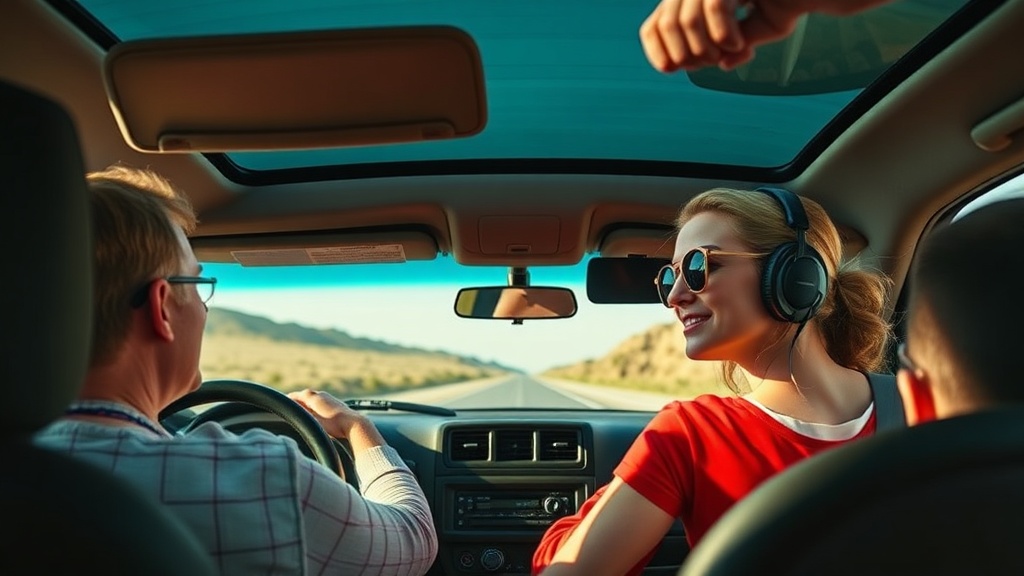
I suggest implementing a "Headphone Rule." If someone has their headphones on, they are officially in their own world. Respect that boundary. It prevents the awkwardness of someone trying to start a conversation while another person is clearly trying to rest.
It's also worth noting that physical discomfort often leads to irritability. If your group is stuck in a cramped vehicle, a quick stop isn't just about the bathroom—it's about mental resets. Use a high-quality cooler, like a Yeti Tundra, to keep snacks accessible so people don't get "hangry" between stops. A hungry traveler is a grumpy traveler, plain and simple.
- The Silent Interval: Agree that every two hours, the car goes silent for 30 minutes.
- Audio Autonomy: The driver chooses the music, but the passenger is the "DJ" for podcasts or audiobooks.
- The Stretch Break: Stop every 100 miles, even if you don't "need" to.
How Can You Handle Differing Budgets on a Group Trip?
You handle differing budgets by setting clear financial expectations and using a transparent tracking system before the engine even starts. Money is the fastest way to ruin a group dynamic, especially when one person wants a $50 steak while another is happy with a gas station sandwich.
Before you leave, decide if you're doing "one big pot" or "individual expenses." If you're a group that prefers shared meals, use an app like Splitwise to track every cent. It keeps things objective so nobody feels like they're being "nick-of-nickered" for a bag of chips.
If you're worried about the logistics of splitting costs, you might find the shared expense hack every group trip needs helpful for setting up a system early. Transparency prevents the "who owes who" tension that often bubbles up at the end of a long haul.
For those traveling with kids or larger groups, food costs can spiral. I always suggest bringing a dedicated stash of non-perishables. A simple box of granola bars or even some jerky can save you from a heated argument at a roadside diner.
| Expense Type | Low-Budget Approach | High-Budget Approach |
|---|---|---|
| Meals | Packable snacks & gas station stops | Sit-down restaurants & local bistros |
| Entertainment | Downloaded podcasts/audiobooks | Live radio or premium streaming |
| Stops | State Parks & public rest areas | Hotel lobbies & curated cafe stops |
What Are the Best Ways to Prevent Arguments During Long Drives?
Preventing arguments requires proactive communication about "pet peeves" and establishing a set of ground rules before the trip begins. Most road trip fights aren't actually about the direction you're driving—they're about small, unaddressed annoyances that build up over time.
One of the biggest culprits? The thermostat. If you don't agree on a temperature, you're asking for trouble. One person is freezing, the other is sweating, and suddenly the conversation turns into a debate about the HVAC system.
Here is a quick checklist to run through before you hit the road:
- The Audio Agreement: Who controls the music? Is it a rotation or one person's playlist?
- The Navigation Protocol: Does the passenger call out turns, or do you rely solely on Google Maps?
- The "Time-Out" Signal: If a conversation gets heated, have a neutral word or gesture that means "we need to stop talking about this for a bit."
- The Snack Schedule: Decide if you're eating on a schedule or whenever someone feels a craving.
I've found that being overly "polite" can actually be a problem. People often swallow their frustrations to avoid conflict, but those frustrations eventually explode. It's much better to say, "Hey, the music is a bit much for me right now, can we lower it?" than to stew in silence for three hours.
If you find that group travel is consistently causing friction, you might want to look at how to plan a trip that avoids group travel disasters. It's a different beast, but the principles of boundary setting are the same.
Another thing to watch for is "decision fatigue." By the time you reach hour eight of a drive, no one wants to decide where to eat. If you can, pre-decide your major stops. Knowing that you'll be at a specific rest area near a certain town can alleviate the stress of constant decision-making.
"The most successful group travelers aren't the ones who never fight; they're the ones who have a plan for when they inevitably do."
Don't forget about the physical environment. A cluttered car leads to a cluttered mind. If the floorboards are covered in empty water bottles and crumpled wrappers, the energy in the car will feel heavy. Keep a small trash bag or a dedicated bin for refuse. It's a small thing, but it keeps the space feeling controlled.
If you're traveling with a partner and the group is actually just your family or friends following you, the dynamics change. You're no longer just managing a trip; you're managing a social hierarchy. Make sure you and your partner are on the same page regarding how you'll handle group decisions. You don't want to be arguing about a detour while your spouse is trying to manage three kids in the backseat.
Lastly, remember that a road trip is a marathon, not a sprint. If you're pushing too hard to reach a destination by a certain time, you'll likely arrive exhausted and annoyed with everyone around you. Sometimes, the best thing you can do for the group is to pull over and just exist in a park for twenty minutes. It's not a waste of time—it's an investment in the mood of the group.
Steps
- 1
Establish a Shared Playlist and Volume Rules
- 2
Schedule Regular Movement and Stretching Breaks
- 3
Designate Personal Space Zones in the Vehicle
- 4
Agree on a Shared Budget for Fuel and Snacks